


Oil Catch can?




2nd Gear Member
Joined: Apr 2011
Posts: 175
From: Florida

1st Gear Member
Joined: Jul 2010
Posts: 69
From: WA

Basically what they do is filter out contaminated oil from blow by in the PCV system. I prefer to use a catch can vs breathers because they actually remove the contaminated oil. Breathers just allow the PCV system to vent but dont really remove the crummy blow by oil. They are good for NA or FI motors because they will keep the throttle body much cleaner as well as the intake valves. For an FI motor that has a positive displacement blower with/without an aftercooler, they help keep the rotors clean from any oil as well as prevent the aftercooler from getting clogged up with oil. Cars from the factory should have a catch can installed IMO!

ChopShop Mod-tator
Joined: Mar 2008
Posts: 2,147
From: Kaintucke
the difference is, one is environmentally friendly, one isnt and one will hurt your performance, one won't.
the breather releases hydrocarbons into the atmosphere, one of the reason why cars run a closed PCV system nowadays....they decide to kill the quality of your intake charge by letting the oily fumes go into your intake, so your cat can sort out the mess.
the problem is, if you dont have a breather atop, and you route it back into the manifold (like stock), while you are seperating the oil from the vapors (like a seperator/catch can), you are STILL allowing slightly oily vapors into your intake, which is crap. This means if you are boosting, you are more prone to detonation, since your intake charge is now even hotter and has oil droplets in it, and...if you are high compression, you are losing horsepower since you could be running more timing, but since you are having to deal with the the hotter intake charge and oil vapor, you have to kill some timing.
the sole purpose of either is to seperate the oil from the crankcase vapors, and still allow the crankcase to breath properly without the oil vapors going into the intake manifold...



5th Gear Member
Joined: Aug 2006
Posts: 2,460
From: Cumming, GA
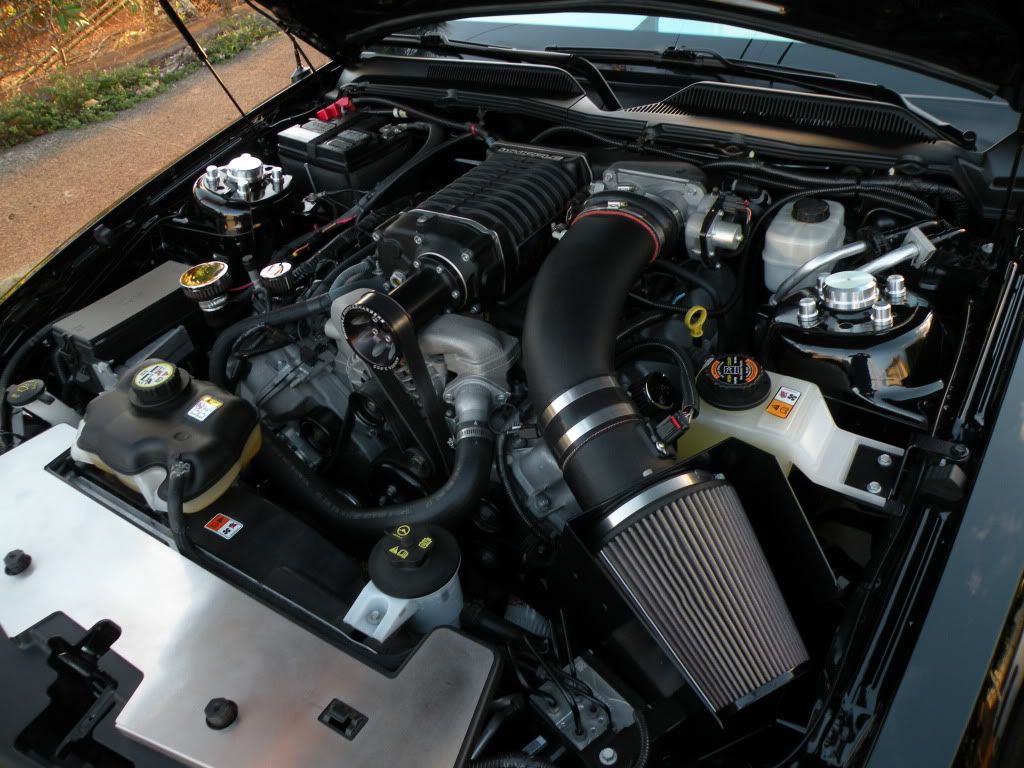
I'm running a JLT with my Saleen setup ... If I empty it out after every gas fillup I get about a teaspoon of oil out of it each time. That would be quite a bit of oil over time coating my rotors and clogging up my intercooler ...