


Suspension?!?!?!!


6th Gear Member
Joined: Apr 2007
Posts: 10,468
From: California

I hate Mod engines. Too complicated, even for an OHC engine. Some of the crap Ford came up with in those things is retarded. Like why in the hell does cam and ignition timing have to be so complicated?!?!
Besides, it's so much easier to rebuild a pushrod engine after you blow it up at the track.
Besides, it's so much easier to rebuild a pushrod engine after you blow it up at the track.

2nd Gear Member
Joined: Dec 2005
Posts: 439
From: MO
What's complicated about the cam or ignition timing on a mod motor? You set the marks, just like with one chain. It is a little tougher to degree the cams, since you have more of them, but it's the same principle as a pushrod motor. Ignition timing is all done by the computer - no distributor to adjust - what could be easier than that? They are more complex (300 parts in the valve train alone on a 4V motor) but it isn't rocket science, and the power per CI is much better, and cheaper, than getting the same from a pushrod small block (but I know that starts a whole other argument that has been hashed before).
6th Gear Member
Joined: Apr 2007
Posts: 10,468
From: California
Some of them have esoteric cam timing procedures...this cam gear points this way, this cam gear points that way. And some of them require a special tool to phase the cam pickup sensor properly to tell the ECM cam position for ignition timing purposes. Without the tool it's virtually impossible to get the ECM to properly reference actual cam position, so ignition timing will always be off.
The principles are the same, yeah, but Ford just made the process more complex than was necessary.
As far as power per cid on ANY engine, it's a nearly worthless measurement if you don't know the rpm range the power is made in. A smaller pushrod engine turning more rpm than a larger OHC engine will have a higher power/cid ratio(assuming same power). F1 cars make nearly 5.5hp/cubic inch(OHC), Cup cars make about 2.5(pushrod), but they both have nearly identical thermal efficiency(fuel consumed per power unit produced over time) and mean cylinder pressures and piston velocities.
Pushrod engines are still cheaper...provided the rpm is kept down. Where the OHC design starts to pay for itself is when the rpm gets higher. Building a pushrod engine that turns high rpm starts to tie up a crapload of money in the valvetrain. The valve train alone on a Cup engine costs more than most peoples entire engine, the price of trying to turn a pushrod engine 9,000+rpm.
In the end it's different ways of skinning the same cat, and each engine has advantages and disadvantages. The combustion chamber and piston don't care whether then engine has pushrods or not, or how many valves it has; all that matters is engine size, rpm, cylinder pressure and fuel burned to make the pressure.
Of course there's also a lot more to how a car performs than how much power it has. Like suspension...which is more critical on a road course than power.
http://www.epi-eng.com/piston_engine..._cup_to_f1.htm A interesting comparison.
The principles are the same, yeah, but Ford just made the process more complex than was necessary.
As far as power per cid on ANY engine, it's a nearly worthless measurement if you don't know the rpm range the power is made in. A smaller pushrod engine turning more rpm than a larger OHC engine will have a higher power/cid ratio(assuming same power). F1 cars make nearly 5.5hp/cubic inch(OHC), Cup cars make about 2.5(pushrod), but they both have nearly identical thermal efficiency(fuel consumed per power unit produced over time) and mean cylinder pressures and piston velocities.
Pushrod engines are still cheaper...provided the rpm is kept down. Where the OHC design starts to pay for itself is when the rpm gets higher. Building a pushrod engine that turns high rpm starts to tie up a crapload of money in the valvetrain. The valve train alone on a Cup engine costs more than most peoples entire engine, the price of trying to turn a pushrod engine 9,000+rpm.
In the end it's different ways of skinning the same cat, and each engine has advantages and disadvantages. The combustion chamber and piston don't care whether then engine has pushrods or not, or how many valves it has; all that matters is engine size, rpm, cylinder pressure and fuel burned to make the pressure.
Of course there's also a lot more to how a car performs than how much power it has. Like suspension...which is more critical on a road course than power.
http://www.epi-eng.com/piston_engine..._cup_to_f1.htm A interesting comparison.

6th Gear Member
Joined: Oct 2006
Posts: 8,162
From:
You know how many blown out spark plugs i have fixed in my lifetime from them?The egr system is junk plastic intakes that crack and leak some have nasty blow by and even seen leaking valve seals.I only worked at a dealership i didn't get to see it all but enough ill never own one.Like my brothers 03 crown vic needed head work had to pull the engine to take the heads off.If it been a normal engine i would have been done in about the time it took to just pull the engine.Gm can have a pushrod engine that passes smog gets about the same mpg but is a 348ci and up.I would love to see a mod motor make 600hp all motor but it won't happen.

Thread Starter
2nd Gear Member
Joined: Feb 2008
Posts: 199
From: arizona
lol i get your guys points about the mod vs pushrod....ive thought this over many many many times and have decided i want mod.....so as i asked before could someone suggest to me a good suspension setup for the front...im not worried about price, if its the right one ill save up for it....thanks
6th Gear Member
Joined: Apr 2007
Posts: 10,468
From: California
I forgot about the spark plug thread issues on the non PI heads. But the OP said he was going with a Termi engine, which is a badass engine, and I'm not aware of many problems with those.
One thing about the mods though, when they're built to turn some rpm and make power, they make good power, especially the Termi's. Their biggest power limitation is the lack of cubic inches, so they basically MUST have a power adder to make serious power.
One thing about the mods though, when they're built to turn some rpm and make power, they make good power, especially the Termi's. Their biggest power limitation is the lack of cubic inches, so they basically MUST have a power adder to make serious power.

1st Gear Member
Joined: Dec 2007
Posts: 67
From: Utah
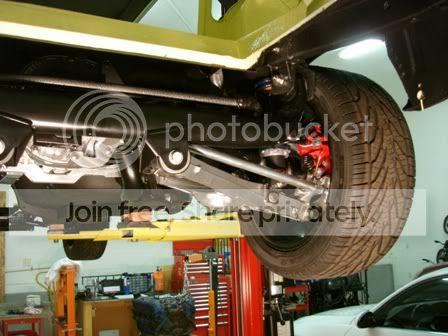
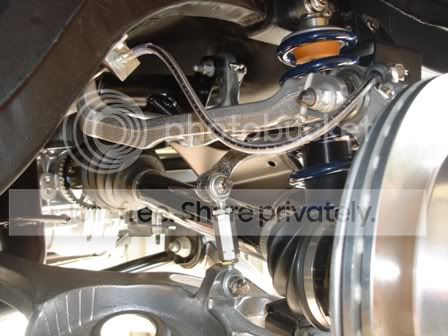
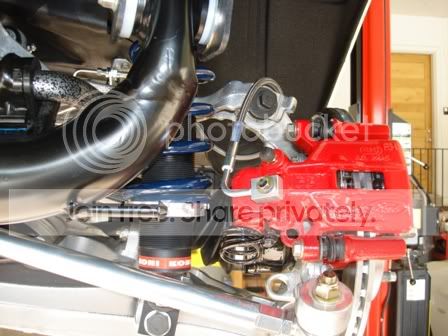
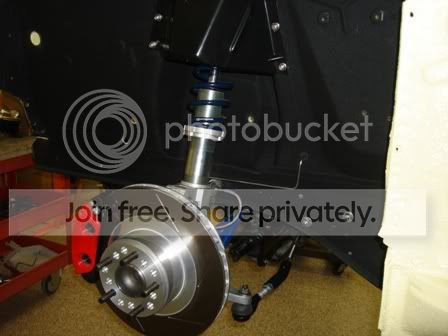
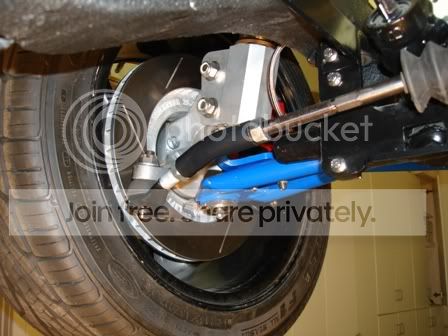
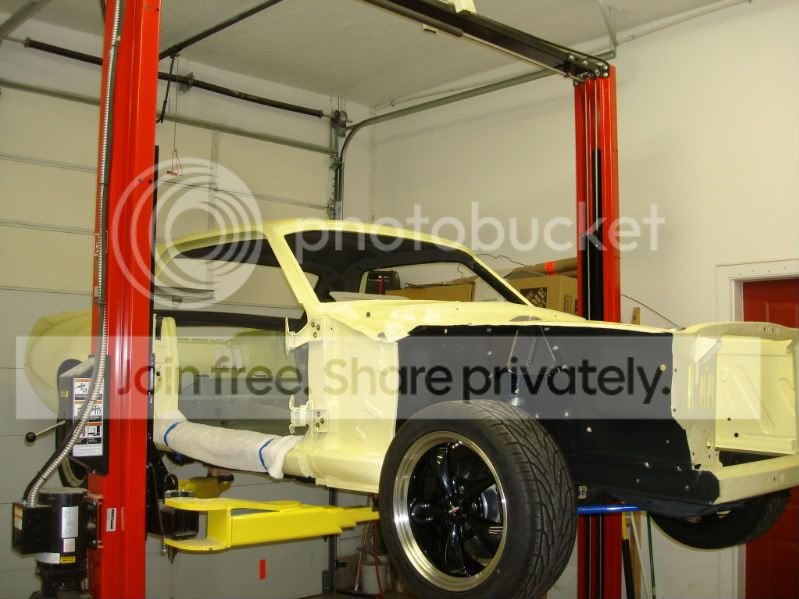
Pretty new to this forum but your build is similar to mine. I put a built 04 Cobra IRS in my 67 cpe. I recently installed a Phase 3 RRS front suspension after some research and discussion with Pete Wado/Reenmachine. He did the same install (RRS) on a couple of his builds and gives it thumbs up on performance. He used the Phase 2 but the main difference is the brakes. My project is still in the build stage and probably won't be done for...well not this spring for sure. I would suggest you talk to him, though he is not presently building cars he will answer from his current website. He has the build expereince using 21rst century technology. Also I would highly recommend you spend time on the svtperformance.com website where in the 98-04 Cobra section you will learn alot about the need to build your IRS. This is especially true if you want performance needed for 600 hp. They discuss replacing the soft rubber bushings in the IRS with new Delrin and UHMW bushings. Eliminates wheel hop on hard launches and significantly improves handling. There are other upgrades as well. You may already know about this stuff but if you haven't been on this website you will learn a bunch from these guys that are building the IRS for street and track performance. I am including a few pics from my suspension build.

6th Gear Member
Joined: Oct 2006
Posts: 8,162
From:
For 10k you can get a roller frame for it http://www.gmachinechassis.com/ the strut on spindle design is ok but a upper a arm will out handle it.The only problem i see with rrs coil overs is what if you need a spindle or brakes and they go under.