


Understanding tire sizes

Thread Starter
1st Gear Member
Joined: Dec 2008
Posts: 67
From: New Jersey
 Understanding tire sizes
Sorry for the naive question, but I am bit lost on tire ratio: I want to get the same staggered set-up at the Shelby, but how come the tires in front are
255 45 18 in the front while the rear are 285 40 18? Wouldn't the difference in ratio from 45 to 40 make the rear assembly wheel + tire look smaller in term of diameter compared to the front? Will the front be higher than the back? I am sure not, so I know I am missing something. Thanks for any information you can provide.
255 45 18 in the front while the rear are 285 40 18? Wouldn't the difference in ratio from 45 to 40 make the rear assembly wheel + tire look smaller in term of diameter compared to the front? Will the front be higher than the back? I am sure not, so I know I am missing something. Thanks for any information you can provide.
Retired Moderator
Joined: Jun 2006
Posts: 9,235
From: SF Bay Area
Take a look at Choosing a new tire and see the paragraphs just below the tires starting with Those three numbers I keep seeing. This will give you all you need to know on dimensions.
Jazzer
Jazzer


2nd Gear Member
Joined: Mar 2008
Posts: 416
From: Richmond, VA
jazzer i've got one question that i can't find an answer to:
will a wider tire always offer better handling than a skinnier tire? for example switching from 245/45-17's to 275/40-17's all around should give me better handling right? and would a staggered setup like 245/45-17 in the front and 275/40-17 in the back offer the same handling characteristics as 275's all around without the weight penalty?
thanks
will a wider tire always offer better handling than a skinnier tire? for example switching from 245/45-17's to 275/40-17's all around should give me better handling right? and would a staggered setup like 245/45-17 in the front and 275/40-17 in the back offer the same handling characteristics as 275's all around without the weight penalty?
thanks
Retired Moderator
Joined: Jun 2006
Posts: 9,235
From: SF Bay Area
Excellent question, bonus points for jms 
No, a wider tire will NOT always offer improved handling. There are two main issues in play in this scenario. The first is tire width relative to wheel width. A tire generally performs best when the sidwalls are straight down from the wheel. This keeps the surface area of the tire (contact patch) nice and flat on the road surface. If one were to install a 275/40, for example, on an 8" wheel, you would have a bit of bulge on the sidewalls. This bulge creates some "slop" when cornering as the wheel is undersized and will "float", for lack of a better term, side to side within the tire. So when you go around a turn, the tire sidewall will give and roll toward the underside of the car. This will force the car onto the sidewall of the tire in the extreme. An oversized tire on a wheel will also likely cause issues with the sidewall as it is stressed due to poor fit. The area meant to be in contact with the road surface on the outside edge of tire, will now be curled around the sides and create poor wear on tire and not perform as it should.
Going thinner on the wheel will also cause problems, but needs to be more extreme to be a real issue. If the sidewalls are pulled too tight via oversized wheel, the sidewalls get strained and can cause tire failure, but again, needs to be pretty extreme and very few people create this issue. Running a bit thinner tire will tend to make your car a bit more "darty" if you had wider tires previously. The tighter sidewall will offer less flex and react more quickly to turning of the wheels. This can also make your wheels a bit more vulneralbe to damage via curbs from the side and bumps from below.
Staggered will change the characteristics of how your car handles and generally create additional understeer. This is when the wheels are turned, but car wants to continue straight. You will have more traction in the rear and front will push or plow if driven hard.
The above has TONS of variables and is a pretty general statement. Not everything mentioned will happen in every case, but more likely than not.
Jazzer
No, a wider tire will NOT always offer improved handling. There are two main issues in play in this scenario. The first is tire width relative to wheel width. A tire generally performs best when the sidwalls are straight down from the wheel. This keeps the surface area of the tire (contact patch) nice and flat on the road surface. If one were to install a 275/40, for example, on an 8" wheel, you would have a bit of bulge on the sidewalls. This bulge creates some "slop" when cornering as the wheel is undersized and will "float", for lack of a better term, side to side within the tire. So when you go around a turn, the tire sidewall will give and roll toward the underside of the car. This will force the car onto the sidewall of the tire in the extreme. An oversized tire on a wheel will also likely cause issues with the sidewall as it is stressed due to poor fit. The area meant to be in contact with the road surface on the outside edge of tire, will now be curled around the sides and create poor wear on tire and not perform as it should.
Going thinner on the wheel will also cause problems, but needs to be more extreme to be a real issue. If the sidewalls are pulled too tight via oversized wheel, the sidewalls get strained and can cause tire failure, but again, needs to be pretty extreme and very few people create this issue. Running a bit thinner tire will tend to make your car a bit more "darty" if you had wider tires previously. The tighter sidewall will offer less flex and react more quickly to turning of the wheels. This can also make your wheels a bit more vulneralbe to damage via curbs from the side and bumps from below.
Staggered will change the characteristics of how your car handles and generally create additional understeer. This is when the wheels are turned, but car wants to continue straight. You will have more traction in the rear and front will push or plow if driven hard.
The above has TONS of variables and is a pretty general statement. Not everything mentioned will happen in every case, but more likely than not.
Jazzer
Last edited by Jazzer The Cat; Oct 15, 2009 at 11:43 AM.
2nd Gear Member
Joined: Mar 2008
Posts: 416
From: Richmond, VA
wow nice write-up jazz. very insightful! i've got 1 more question for ya now lol
u stated that a staggered setup would create understeer. since our cars naturally tend to oversteer (because of rwd), would going with a staggered setup help to balance it out? i noticed u have a setup like that on ur car with the 315's in the back and 295's up front
u stated that a staggered setup would create understeer. since our cars naturally tend to oversteer (because of rwd), would going with a staggered setup help to balance it out? i noticed u have a setup like that on ur car with the 315's in the back and 295's up front
Retired Moderator
Joined: Jun 2006
Posts: 9,235
From: SF Bay Area
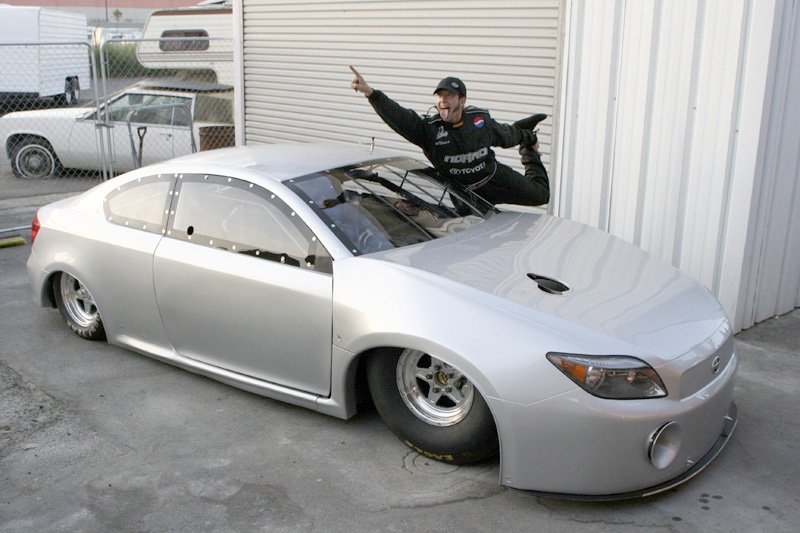
Going staggered will usually create additional understeer to what the Mustangs come with stock. I guess if one ran staggered in the reverse order, it would be an improvement in this dept.
I don't suppose that would look to good:
Yes, I run a 295/315 set-up and had HUGE amounts of understeer on AX (auto-cross) events. It was basically impossible to pitch the rear outward and drift to any degree whatsoever, uless I "tripped" it. I finally got tired of trying to work with it and picked up an MM adjustable rear sway bar and did wonders. The other option was to run a stiffer spring out back, which would be the right way, but the 200# springs are VERY nice for the street. The sway bar seems to have done the trick, as I adjusted it to full stiffness on my last day of AX this season just this past weekend. Will see how she does come next season in April or so *insert image of Jazzer balling his eyes out and bearly able to finish this po....
I don't suppose that would look to good:
Yes, I run a 295/315 set-up and had HUGE amounts of understeer on AX (auto-cross) events. It was basically impossible to pitch the rear outward and drift to any degree whatsoever, uless I "tripped" it. I finally got tired of trying to work with it and picked up an MM adjustable rear sway bar and did wonders. The other option was to run a stiffer spring out back, which would be the right way, but the 200# springs are VERY nice for the street. The sway bar seems to have done the trick, as I adjusted it to full stiffness on my last day of AX this season just this past weekend. Will see how she does come next season in April or so *insert image of Jazzer balling his eyes out and bearly able to finish this po....

4th Gear Member
Joined: May 2005
Posts: 1,648
From: New York
Sorry for the naive question, but I am bit lost on tire ratio: I want to get the same staggered set-up at the Shelby, but how come the tires in front are
255 45 18 in the front while the rear are 285 40 18? Wouldn't the difference in ratio from 45 to 40 make the rear assembly wheel + tire look smaller in term of diameter compared to the front? Will the front be higher than the back? I am sure not, so I know I am missing something. Thanks for any information you can provide.
255 45 18 in the front while the rear are 285 40 18? Wouldn't the difference in ratio from 45 to 40 make the rear assembly wheel + tire look smaller in term of diameter compared to the front? Will the front be higher than the back? I am sure not, so I know I am missing something. Thanks for any information you can provide.
More typical tire sizes you'd be likely to see:
245/45/18
255/45/18
255/40/18
275/40/18
285/40/18
295/35/18
305/35/18

Thread
Thread Starter
Forum
Replies
Last Post
MustangForums Editor
Mustang News, Concepts, Rumors & Discussion
3
Nov 10, 2015 11:39 AM
Boostaddict
Lethal Performance
2
Sep 8, 2015 09:56 PM
MustangForums Editor
Street/Strip
5
Sep 8, 2015 06:25 PM
M3hunter
S197 Handling Section
0
Sep 5, 2015 03:42 PM
18, 2006, 255, 2854018, 295, 40, dimensions, mustang, recommended, sizes, svo, tire, tires, understanding, width
