


MSD Ignition questions

4th Gear Member
Joined: Sep 2008
Posts: 1,839
From: Connecticut

Sorry for the delay in responding. I typed this entire thing yesterday and the server crashed before it posted and it was lost! I needed a day to recover.
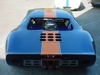
You need a steel or composite gear with that cam. I have 31-760-8 with ported AFR 185 heads in the 347 in my GT40 and it makes 531HP with a 7500 redline. I am using an MSD distributor with the Comp Cams composite gear. MSD 85840 is the right distributor, but doesn't use vacuum advance and you said you wanted it (it makes sense to have it in a street driven car and I'll explain why below). I would go with MSD 8478 if you want to keep the vacuum advance:
http://store.summitracing.com/partde...5&autoview=sku
However, it has an iron gear and you will have to purchase either a steel MSD gear:
http://store.summitracing.com/partde...4&autoview=sku
Or composite Comp Cams gear:
http://store.summitracing.com/partde...0&autoview=sku
You will then have to install the gear, which you can do yourself, but requires precise alignment. Bottom line, you end up at close to $500 for the distributor in order to get vacuum advance. That's almost $200 more for vacuum advance!
Let's talk about vacuum advance for a minute. There seems to be some misunderstanding about it based on some of the comments in this thread. There are three important types of timing/advance to consider:
1. Base timing: Set with the timing light, it is the point at which ignition (spark) occurs during the power stroke. It usually occurs before the piston reaches the top of the compression stroke (before top dead center - BTDC). This gives the spark time to ignite the mixture and for the flame to travel appropriately to maximize the power stroke. Most SBFs run best with around 12 to 14 degrees of base timing.
2. Mechanical Advance: All internal combustion engines require mechanical advance. It allows ignition to occur earlier as the engine RPM increases. This is necessary as piston speed increases, the spark has to occur earlier in order to maximize the power stroke. Most SBFs run best with a total (base plus mechanical) advance of 34 degrees, all in by 3400 RPM (this will vary a bit based on cam). Too much advance cause detonation (spark occurs too early causing stress to the piston) as max power is felt before the piston has reach the optimum positon. In the extreme this can damage the engine as the full combustion occurs before the piston reachs TDC and that cylinder tries to move the piston in the opposite direction!
3. Vacuum advance: Not required, but helpful in increasing efficiency (read as better gas mileage). Many people have the mistaken belief that it is for emissions only and that racers don't use it. Fact is, most racers don't use it as they could not benefit from it given where their engine operates and it is one more thing to break. Vacuum advance advances the spark even more (adds to mechanical) when manifold vacuum is high.
Vacuum advance further tunes the spark profile by allowing even more advance when the engine is not under load. Here's an example: Let's say you are accelerating at WOT and at a point in time cross 3000 RPM. At this point in time, base plus mechanical advance is around 30 degrees. Manifold vacuum is very low as the throttle plates are wide open and engine load is high, so there is no vacuum advance. Now you have completed your acceleration and are cruising down the highway in high gear with the accelerator pedal in a fixed position and the engine is running at a steady 3000 RPM. The throttle plates are mostly closed so manifold vacuum is high. Base plus mechanical advance is around 30 degrees. The engine is not under load and the higher manifold vacuum causes the vacuum canister to add additional advance. This allows the enigne to run more efficiently (better gas mileage). Vacuum advance gives you all the power you had, plus additional engine efficiency when it is not under load.
EFI/computer controlled engine tyupically have the spark controlled by the computer, effectively adding/subtracting advance much more precisely than traditional mechanical/vacuum advance can.
So, it is your choice. Good luck!
You need a steel or composite gear with that cam. I have 31-760-8 with ported AFR 185 heads in the 347 in my GT40 and it makes 531HP with a 7500 redline. I am using an MSD distributor with the Comp Cams composite gear. MSD 85840 is the right distributor, but doesn't use vacuum advance and you said you wanted it (it makes sense to have it in a street driven car and I'll explain why below). I would go with MSD 8478 if you want to keep the vacuum advance:
http://store.summitracing.com/partde...5&autoview=sku
However, it has an iron gear and you will have to purchase either a steel MSD gear:
http://store.summitracing.com/partde...4&autoview=sku
Or composite Comp Cams gear:
http://store.summitracing.com/partde...0&autoview=sku
You will then have to install the gear, which you can do yourself, but requires precise alignment. Bottom line, you end up at close to $500 for the distributor in order to get vacuum advance. That's almost $200 more for vacuum advance!
Let's talk about vacuum advance for a minute. There seems to be some misunderstanding about it based on some of the comments in this thread. There are three important types of timing/advance to consider:
1. Base timing: Set with the timing light, it is the point at which ignition (spark) occurs during the power stroke. It usually occurs before the piston reaches the top of the compression stroke (before top dead center - BTDC). This gives the spark time to ignite the mixture and for the flame to travel appropriately to maximize the power stroke. Most SBFs run best with around 12 to 14 degrees of base timing.
2. Mechanical Advance: All internal combustion engines require mechanical advance. It allows ignition to occur earlier as the engine RPM increases. This is necessary as piston speed increases, the spark has to occur earlier in order to maximize the power stroke. Most SBFs run best with a total (base plus mechanical) advance of 34 degrees, all in by 3400 RPM (this will vary a bit based on cam). Too much advance cause detonation (spark occurs too early causing stress to the piston) as max power is felt before the piston has reach the optimum positon. In the extreme this can damage the engine as the full combustion occurs before the piston reachs TDC and that cylinder tries to move the piston in the opposite direction!
3. Vacuum advance: Not required, but helpful in increasing efficiency (read as better gas mileage). Many people have the mistaken belief that it is for emissions only and that racers don't use it. Fact is, most racers don't use it as they could not benefit from it given where their engine operates and it is one more thing to break. Vacuum advance advances the spark even more (adds to mechanical) when manifold vacuum is high.
Vacuum advance further tunes the spark profile by allowing even more advance when the engine is not under load. Here's an example: Let's say you are accelerating at WOT and at a point in time cross 3000 RPM. At this point in time, base plus mechanical advance is around 30 degrees. Manifold vacuum is very low as the throttle plates are wide open and engine load is high, so there is no vacuum advance. Now you have completed your acceleration and are cruising down the highway in high gear with the accelerator pedal in a fixed position and the engine is running at a steady 3000 RPM. The throttle plates are mostly closed so manifold vacuum is high. Base plus mechanical advance is around 30 degrees. The engine is not under load and the higher manifold vacuum causes the vacuum canister to add additional advance. This allows the enigne to run more efficiently (better gas mileage). Vacuum advance gives you all the power you had, plus additional engine efficiency when it is not under load.
EFI/computer controlled engine tyupically have the spark controlled by the computer, effectively adding/subtracting advance much more precisely than traditional mechanical/vacuum advance can.
So, it is your choice. Good luck!
4th Gear Member
Joined: Sep 2008
Posts: 1,839
From: Connecticut
Oh, I just saw this Ford steel gear that will also work and it is only $25. When does that ever happen?!
http://store.summitracing.com/partde...F&autoview=sku
http://store.summitracing.com/partde...F&autoview=sku

Thread Starter
5th Gear Member
Joined: Aug 2007
Posts: 2,035
From: Delaware(US) & Nova Scotia(Canada)
Mike thanks for the article. Good read and saved to my local wiki.
71stang99.. I'll install the ignition box inside the car under the dash. Considering teh 6AL-2 for the smaller size and no required modules. It'll be secured to a plate where I can easily pull it down for adjustments. From what the MSD tech said on the phone the distributor lead should be long enough.. 6ft if I remember correctly.
urban_cowboy.. My take on that is the iron gear will wear quicker since steel is harder. I'd love to get the Air gap installed but its way too high at 5.8" tall. I'm hoping to use the Edelbrock Performer RPM (71811) intake which is 4.8" tall. Hope this will work with the height issues in the 67/68 with the 351w. The standard Performer is only 4.07" but I've heard its pretty much a slouch. Might grab a set of Ron Morris engine mounts in case I need the 1/2".
If you look at the 69/70 mustang hood you'll see the slightly raised bullet section in the center from front to back. I was thinking I might cut the 68 fiberglass hood along that area though slightly wider, raise it from 1/2" in front sweeping back to perhaps 1 to 1.5" in the rear. Just to be a bit different and allow for more room. I haven't made up my mind yet.
71stang99.. I'll install the ignition box inside the car under the dash. Considering teh 6AL-2 for the smaller size and no required modules. It'll be secured to a plate where I can easily pull it down for adjustments. From what the MSD tech said on the phone the distributor lead should be long enough.. 6ft if I remember correctly.
urban_cowboy.. My take on that is the iron gear will wear quicker since steel is harder. I'd love to get the Air gap installed but its way too high at 5.8" tall. I'm hoping to use the Edelbrock Performer RPM (71811) intake which is 4.8" tall. Hope this will work with the height issues in the 67/68 with the 351w. The standard Performer is only 4.07" but I've heard its pretty much a slouch. Might grab a set of Ron Morris engine mounts in case I need the 1/2".
If you look at the 69/70 mustang hood you'll see the slightly raised bullet section in the center from front to back. I was thinking I might cut the 68 fiberglass hood along that area though slightly wider, raise it from 1/2" in front sweeping back to perhaps 1 to 1.5" in the rear. Just to be a bit different and allow for more room. I haven't made up my mind yet.
Thread Starter
5th Gear Member
Joined: Aug 2007
Posts: 2,035
From: Delaware(US) & Nova Scotia(Canada)
Mark.. wow! Thanks for the super explanation. Twice no less due to the server crash. Been there, it sucks and I appreciate you taking the time to repost it all. Even a replacement gear that's 50.00 bucks cheaper to boot! Its expensive yes but with the price of gas spending a bit more now to get slightly better fuel mileage will save us money down the road. I had considered an EFI setup but for now staying with the carb. Might look into it in a few years though.
I've discovered that attempting to build a reliable (wife's daily driver), good looking (she wants to show it now and then), powerful (she's bored with 4 cylinders) engine that will also give decent fuel mileage is down right expensive.
Thanks again.
I've discovered that attempting to build a reliable (wife's daily driver), good looking (she wants to show it now and then), powerful (she's bored with 4 cylinders) engine that will also give decent fuel mileage is down right expensive.
Thanks again.

Thread Starter
5th Gear Member
Joined: Aug 2007
Posts: 2,035
From: Delaware(US) & Nova Scotia(Canada)
I'm in NJ and your in FL.. Mind yelling a bit louder so I can hear you. 
Actually I did reply to you here, have looked at the the linked items you listed and a few others Crane products. I'm not buying until after Christmas so I'm still looking at different options. Thanks again.
Actually I did reply to you here, have looked at the the linked items you listed and a few others Crane products.
I'm not buying until after Christmas so I'm still looking at different options. Thanks again.
4th Gear Member
Joined: Sep 2008
Posts: 1,839
From: Connecticut
MSD has brand equity and eclipses the rest of the market in sales. However, the Crane and Mallory set ups are just as good and for some applications much better. I work for a brand company (DEO on the NYSE) and always get suckered into the brand. That said, I have used MSD for years on many projects and never had a problem. I don't think you can go wrong with any of them.
4th Gear Member
Joined: Sep 2008
Posts: 1,839
From: Connecticut

6th Gear Member
Joined: Dec 2006
Posts: 8,007
From: Citrus County, FL
the main bad parts of using the msd over the crane hi-6 were addressed in the new 6al2, but the features of the crane dizzy are things i dont think any other manufacturer currently employs. i think that dizzy won a best of show award at sema or something a couple years ago if that tells you anything.

3rd Gear Member
Joined: Mar 2006
Posts: 971
From: Apison, TN
Ok, sorry for the delay, I haven't gotten back on in a few days. The ready to run 351W dizzy from MSD is this:
http://www.msdignition.com/Products/...stributor.aspx
They come with a cast gear, and it does state that you need to change to a steel gear for the roller cam. That being said, I couldn't find one for my distributor, because it has the small diameter shaft like the early 289/302s. The steel gears I found are for the larger shaft dizzys, like the one in the 351W. So... I put on a bronze gear because they are supposed to work with either, but nobody says anything about high volume oil pumps. I have one and with the oil being cold, it broke the gear as soon as oil pressure built up. No big deal, got it all out, but now I am just running a cast gear because I can't find a steel one that will fit my shaft. The good news is that I have had absolutely NO PROBLEMS whatsoever with the setup (knock on wood). Hope this helps. By the way, I really do love all of my MSD products, my entire ignition is all from them. I would reccommend them anyday.
http://www.msdignition.com/Products/...stributor.aspx
They come with a cast gear, and it does state that you need to change to a steel gear for the roller cam. That being said, I couldn't find one for my distributor, because it has the small diameter shaft like the early 289/302s. The steel gears I found are for the larger shaft dizzys, like the one in the 351W. So... I put on a bronze gear because they are supposed to work with either, but nobody says anything about high volume oil pumps. I have one and with the oil being cold, it broke the gear as soon as oil pressure built up. No big deal, got it all out, but now I am just running a cast gear because I can't find a steel one that will fit my shaft. The good news is that I have had absolutely NO PROBLEMS whatsoever with the setup (knock on wood). Hope this helps. By the way, I really do love all of my MSD products, my entire ignition is all from them. I would reccommend them anyday.