


Grounding your 65 engine

Thread Starter
2nd Gear Member
Joined: Jul 2007
Posts: 297
From: INDY
 Grounding your 65 engine
Where is the best place to ground your engine for a 65 stang? I have had problems, with an engine hard to turn over after it gets hot. My ground is from my alternator to my engine block. At that, it has been freshly painted.
Should I ground it somewhere else, where there is no conflict with paint to where it is grounded?
Thanks for the help
Should I ground it somewhere else, where there is no conflict with paint to where it is grounded?
Thanks for the help

6th Gear Member
Joined: May 2009
Posts: 5,232
From: PA
The battery grond is bolted directly to the engine block on the bottom front corner of the block near the alternator. The engine is grounded to the chassis with a heavy-gauge wire from the head to the firewall.

5th Gear Member
Joined: Sep 2006
Posts: 3,302
From: Northernish Eastish Central Texas
You can't 'over' ground it. Use the highest quality components you can afford. Battery directly to block. Firewall to intake or to back of heads. Adding another that attached block to frame helps also.
When attaching, use a high quality lug on the end of the cable. Don't just wrap a wire around a bolt. Crimping the lug on the cable is good, but that often will vibrate over time and create intermittent connections. If possible, solder the lug to the cable.
Prepping the surface is critical. Use a 400 grit emory cloth. Clean area with solvant to remove any remaining oils.

The best tool for this is a drill mounted wire bonding brush that you place in the hole and clean the perimeter.
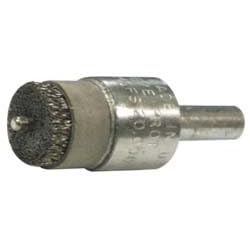
Also, use a gripping style washer that digs into the metal surfaces. Afterwards coat with some sort of corrosion preventing material (paint, dielectric grease, etc)
Taking the time to do your grounds right will pay for itself many times over down the road.
When attaching, use a high quality lug on the end of the cable. Don't just wrap a wire around a bolt. Crimping the lug on the cable is good, but that often will vibrate over time and create intermittent connections. If possible, solder the lug to the cable.
Prepping the surface is critical. Use a 400 grit emory cloth. Clean area with solvant to remove any remaining oils.
The best tool for this is a drill mounted wire bonding brush that you place in the hole and clean the perimeter.
Also, use a gripping style washer that digs into the metal surfaces. Afterwards coat with some sort of corrosion preventing material (paint, dielectric grease, etc)
Taking the time to do your grounds right will pay for itself many times over down the road.

6th Gear Member
Joined: Jan 2007
Posts: 5,469
From: AR
These days I use heavy duty cable ends that are used for "main" electrical ervice connections for household wiring. These are available at Lowes or Home Depot. They can be taken apart and cleaned up if they corroded up, but so far no corrosion on any of these I have used.
There are big industrial looking copper ends and also more descrete aluminum ones available.
Anymore I ground my engines from the bell housing very near the starter (or on the starter bolts even) directly to the battery.
While it might "seem" that the head is a good ground I think that all of the cast iron, head gaskets etc. makes for a not so good location.
Auto starters require a lot of current at LOW voltage...
this circuit is no place for a short cut.
There are big industrial looking copper ends and also more descrete aluminum ones available.
Anymore I ground my engines from the bell housing very near the starter (or on the starter bolts even) directly to the battery.
While it might "seem" that the head is a good ground I think that all of the cast iron, head gaskets etc. makes for a not so good location.
Auto starters require a lot of current at LOW voltage...
this circuit is no place for a short cut.

Thread
Thread Starter
Forum
Replies
Last Post
