


EFI or carb


4th Gear Member
Joined: Feb 2006
Posts: 1,538
From: So. Cal,the O.C.

Like I said, it comes down to the level of tuning you want to get into. But this "EFI outperforms carb" nonsense, is just that, nonsense. Case in point, compare my times in my pushrod carb'd 5.0 to the new 2011 Mustang GT with the DOHC 5.0. The few 2011's running at the track I've run at post similar times for stock GT's, but in September when it's 50* outside. I ran when it was 85* outside. The new EFI variable valve timing 2011's run basement 13's at ~109mph at that track with a DA of around sea level. When I ran with a DA of ~2,500' I went 13.20's at 107. DA correct the times to account for whether and that puts my carb'd 5.0 at least as fast, or slightly faster than the new 2011 GT(my times correct to 12.80's at 110mph, for whatever that's worth).
And then consider, that while the new 2011 is about 300-400lbs heavier, I'm also running with a non variable valve timing, pushrod head engine with less gearing. The 2011 has more gearing, a bitchin 4v head, and independently variable camshaft timing. And that was BEFORE my exhaust/cam swap and more advanced tuning system. So clearly I'm not being power limited by having a carburetor.
And then consider, that while the new 2011 is about 300-400lbs heavier, I'm also running with a non variable valve timing, pushrod head engine with less gearing. The 2011 has more gearing, a bitchin 4v head, and independently variable camshaft timing. And that was BEFORE my exhaust/cam swap and more advanced tuning system. So clearly I'm not being power limited by having a carburetor.
IMO, there is NO comparision whether you correct your time or not.

6th Gear Member
Joined: Apr 2007
Posts: 10,468
From: California
Im not sure who was driviing the new 2011 mustangs you saw, but obviously they cant drive.The 2011 5.0 has run consistent 12.70's at 112+ in this area in stock form.With a tune they have run 12.40-50's over 115+.As far as weight, if you are referring to a 67 Mustang,there is no way a new 2011 is 3-400 lbs heavier unless you added weight.
IMO, there is NO comparision whether you correct your time or not.
IMO, there is NO comparision whether you correct your time or not.
My point was to compare a known stock car/engine to mine at the same track for the purpose of determining whether a carburetor produces less power. A bolt-on and tuned 3V should be a match for me "by the numbers," yet at that track even when they have better 60's I still outrun them.
And as far as weight, the new 2011's are 3,600lbs. My Mustang is prolly around 3,200-3,300lbs. For anyone who thinks a stock 67 Mustang was 2,800lb(like I've seen people state), they're smoking crack. Maybe a stripped down 0 option 6 cylinder. 3,300lbs is pretty light for a car, the only modern cars that come in under 3,400lbs today are built with lots of aluminum and composites(Porsche 911 for example at ~3,100lbs).
As far as your carburetor issue, the biggest problem is you had it dyno tuned. I've said it a hundred times on this forum, dyno tuning carburetors is more than likely going to result in a poorly running car. Carb's operate way different on a dyno than they do in a running vehicle, because they respond to load. If it wasn't consistent then something wasn't right. And as far as retuning any time you make a change, that's true of any performance engine. Even many EFI engines benefit from a different tune when you change something. Different parts make the engine behave differently, which may require different fuel and spark to make best power.
6th Gear Member
Joined: Apr 2007
Posts: 10,468
From: California
Your times and knowledge are impressive. So for a novice are you saying EFI would be an easier way to get into power? After all you wrote about carbs if that is what you are saying, I am sold on keeping my EFI. Don't think I have enough years left to learn enough to tune a complex carb. Just this decision is making my brain hurt. Thanks

6th Gear Member
Joined: Oct 2006
Posts: 6,417
From: Cork, Ireland
"The biggest compromise here [carburetors] is that, other than at idle where the mixture screws have enough authority to change things, we are locked to one flow ratio of air to fuel for the primary circuit and one ratio for the secondary circuit, if so equipped. This means tuning a carburetor often boils down to a compromise of desired air/fuel ratios between cruise, light throttle, and wide open throttle."
holy crap. what muppet wrote that book?
holy crap. what muppet wrote that book?

6th Gear Member
Joined: Feb 2007
Posts: 7,635
From: state of confusion
I'm afraid that I'm having a bit of difficulty with the concept that fuel dribbling out a booster at essentially zero pressure could be anywhere near as well atomized as flow @ 40 psi or more through an injector. Not immediately, anyway, so you NEED some runner length (and the finite amount more time it provides) to get that atomization.
I understand the cooling effect inherent in a wet-flow manifold, and I know I've seen where EFI manifolds installed the injectors further back up the runners for just this reason. Not particularly production or emissions friendly, though.
It still comes back to manifold design, rather than EFI vs carbs. The last time I built up the engine in the Malibu, I was reasonably sure that I wanted to go EFI, so I did a fair amount of research. One of the things that came out of it was that when you put a 4-barrel looking EFI throttle body on top of a Victor Jr-based manifold with injectors down at the ends of the runners, the resulting torque curve isn't much different from a regular Vic Jr with a Holley sitting on top of it. Saggy 3000 - 3500 rpm lower midrange and all, and exactly the kind of thing that you can readily live with in a race engine that never sees less than 4200 rpm but not as well in a street engine.
Norm
I understand the cooling effect inherent in a wet-flow manifold, and I know I've seen where EFI manifolds installed the injectors further back up the runners for just this reason. Not particularly production or emissions friendly, though.
It still comes back to manifold design, rather than EFI vs carbs. The last time I built up the engine in the Malibu, I was reasonably sure that I wanted to go EFI, so I did a fair amount of research. One of the things that came out of it was that when you put a 4-barrel looking EFI throttle body on top of a Victor Jr-based manifold with injectors down at the ends of the runners, the resulting torque curve isn't much different from a regular Vic Jr with a Holley sitting on top of it. Saggy 3000 - 3500 rpm lower midrange and all, and exactly the kind of thing that you can readily live with in a race engine that never sees less than 4200 rpm but not as well in a street engine.
Norm
Last edited by Norm Peterson; Apr 8, 2011 at 10:14 AM.
Guest
Posts: n/a
how is the rest of the car? are you keeping it original or are you modding it heavily? if you already have a efi setup ready to go, go for it. if you had a nice carb sitting around i would say go for the carb, depends on what you have and how much you are willing to spend.
4th Gear Member
Joined: Feb 2006
Posts: 1,538
From: So. Cal,the O.C.
I didn't say the track in your area, I said the track I've run at. Prep isn't always the greatest(often sucks bad enough that I have better traction on the street) and weather is often brutal. When I was out there going low 13's on 2.20 60's, stock 3V's couldn't break out of the 14's on 2.0 60's. Full bolt on and tuned 3V's were only pulling mid 13's, and full bolt on 3V's with drag radials rarely ever saw 12.90's. Most cars run around a half second off their "magazine" time and are down as much as 3-4mph. Yes the new 2011 is a consistant high 12 at 110-112mph car...with good weather and track conditions.
My point was to compare a known stock car/engine to mine at the same track for the purpose of determining whether a carburetor produces less power. A bolt-on and tuned 3V should be a match for me "by the numbers," yet at that track even when they have better 60's I still outrun them.
And as far as weight, the new 2011's are 3,600lbs. My Mustang is prolly around 3,200-3,300lbs. For anyone who thinks a stock 67 Mustang was 2,800lb(like I've seen people state), they're smoking crack. Maybe a stripped down 0 option 6 cylinder. 3,300lbs is pretty light for a car, the only modern cars that come in under 3,400lbs today are built with lots of aluminum and composites(Porsche 911 for example at ~3,100lbs).
As far as your carburetor issue, the biggest problem is you had it dyno tuned. I've said it a hundred times on this forum, dyno tuning carburetors is more than likely going to result in a poorly running car. Carb's operate way different on a dyno than they do in a running vehicle, because they respond to load. If it wasn't consistent then something wasn't right. And as far as retuning any time you make a change, that's true of any performance engine. Even many EFI engines benefit from a different tune when you change something. Different parts make the engine behave differently, which may require different fuel and spark to make best power.
My point was to compare a known stock car/engine to mine at the same track for the purpose of determining whether a carburetor produces less power. A bolt-on and tuned 3V should be a match for me "by the numbers," yet at that track even when they have better 60's I still outrun them.
And as far as weight, the new 2011's are 3,600lbs. My Mustang is prolly around 3,200-3,300lbs. For anyone who thinks a stock 67 Mustang was 2,800lb(like I've seen people state), they're smoking crack. Maybe a stripped down 0 option 6 cylinder. 3,300lbs is pretty light for a car, the only modern cars that come in under 3,400lbs today are built with lots of aluminum and composites(Porsche 911 for example at ~3,100lbs).
As far as your carburetor issue, the biggest problem is you had it dyno tuned. I've said it a hundred times on this forum, dyno tuning carburetors is more than likely going to result in a poorly running car. Carb's operate way different on a dyno than they do in a running vehicle, because they respond to load. If it wasn't consistent then something wasn't right. And as far as retuning any time you make a change, that's true of any performance engine. Even many EFI engines benefit from a different tune when you change something. Different parts make the engine behave differently, which may require different fuel and spark to make best power.
But all of your "arguments" come down to, you know to build a $1500 carb and make it run in regardless of temperature or altitude.A carb is easier to tune and will make more power, something you have not and cannot prove. Fuel injection is easier to compensate for changes in weather, altitude or parts changes.The carb guys will say go carb, fuel injention guys will say fuel injection. Its personal preference and those can affors will get it and those cant will stick with a carb.
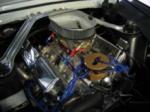
2nd Gear Member
Joined: Nov 2010
Posts: 493
From: Ontario
In my opinion the fuel injection will make it have a little better driveability and get better fuel mileage but at the cost of being more complicated and expensive unless you can do all the work yourself.....Do you drive the car in cold weather or varying altitudes where the fuel injection would benefit the most?..Most people with classic stangs only drive them in nice summer weather so a carb works just fine and is a simple bolt on that is easily tuned...It also keeps the car a little more original/classic in my opinion...You say that your car is way over budget and your having a hard time deciding on anything..I would just stick with your original plan and keep it simple.....There are so many opinions on these forums that you end up like a dog chasing its tail....I know I have been there asking for opinions on building my engine..
4th Gear Member
Joined: Feb 2006
Posts: 1,538
From: So. Cal,the O.C.
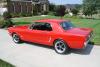
Thread Starter
2nd Gear Member
Joined: Jan 2011
Posts: 341
From: NC
In the end, in order to get the benefit of a carb you need a good carb that is properly tuned. If you don't have the knowledge to tune it, or know someone who does, you're just about dead in the water. And if you already have the EFI system, like everything with engines....it's always cheaper to build what you already have. If you want to upgrade it, then get a better intake and a better ECM. FAST sells stand alone ECM's as performance replacements for stock Ford ECMs, but it's money. There's also Megasquirt if you're not afraid of electronics and learning. If you already have a complete factory EFI system, all you really need is a decent intake to match your heads/cam, and a couple hours at a dyno tuning shop.