
Ford’s Greatest Automotive Achievement: 10 Million Mustangs Produced

It’s not only a major milestone for the Ford Mustang, it’s also a high point in automotive culture & American history as a whole.
With a large enough factory and workforce, any company can produce 10 million of something. There’s a difference between making 10 million of something and selling 10 million of something, though. Especially when it comes to vehicles. That gets even harder to do when you’re talking about a vehicle that’s more of an object of desire than necessity. It’s taken more than 50 years, but Ford’s managed to do it. It’s now sold 10 million Mustangs.
As a recent piece from Bloomberg shows, the path to 10 million has been one filled with ups and downs and sidetracks. After Ford debuted the Mustang with its aviation-inspired name and European-influenced styling at the New York World’s Fair in 1964, it went on to sell more than 22,000 units of the pony car – on its first day of sales. It was a hit.
“Mustang is the heart and soul of this company and a favorite around the world,” said Jim Farley, president of global markets, Ford Motor Company, in a recent press statement. “I get the same thrill seeing a Mustang roll down a street in Detroit, London or Beijing that I felt when I bought my first car – a 1966 Mustang coupe that I drove across the country as a teenager. Mustang is a smile-maker in any language.”
The Mustang soon went on to catch the eye of Carroll Shelby, whose various models over the years have not only made the Mustang more popular, but have also made Shelby Mustangs into a separate breed of automotive icon. According to Bloomberg, “A 1965 Shelby GT350R that sold for $990,000 at an RM Sotheby’s auction in Monterey, Calif., is the most expensive Mustang ever sold in public.”
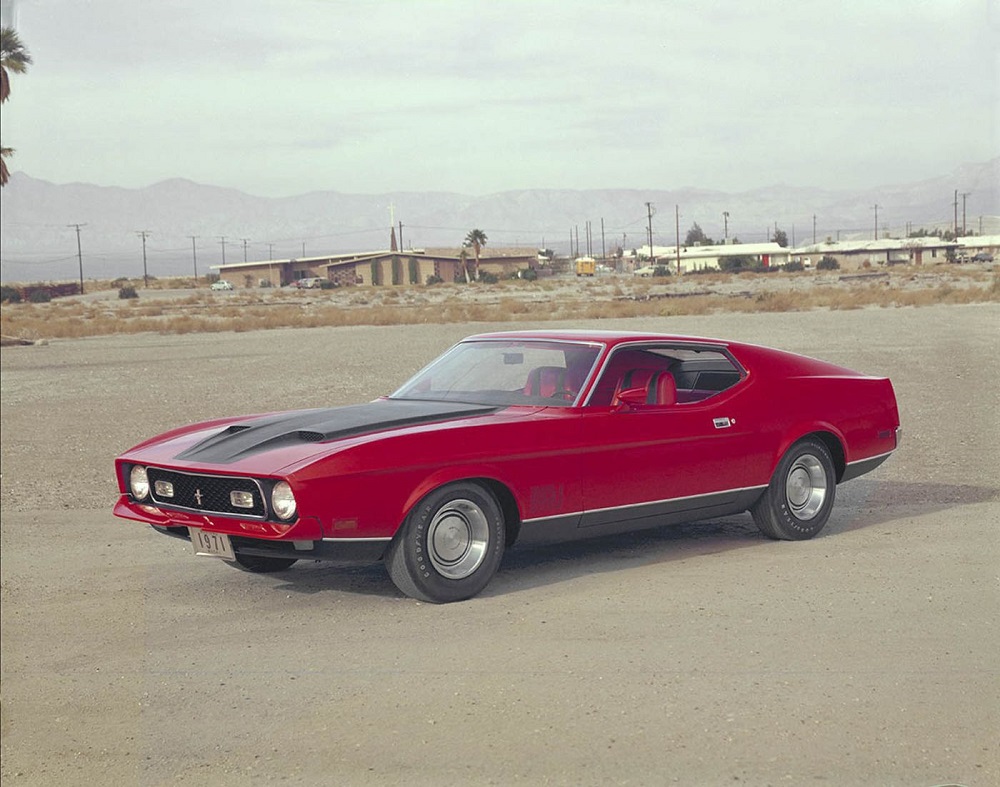
By 1966, Ford had sold more than one million Mustangs. Two years later, Ford celebrated another big number: the release of the 428 Cobra Jet engine. Soon the Mustang itself grew larger: By 1971, it was almost a foot longer and roughly 600 pounds heavier than the original car.

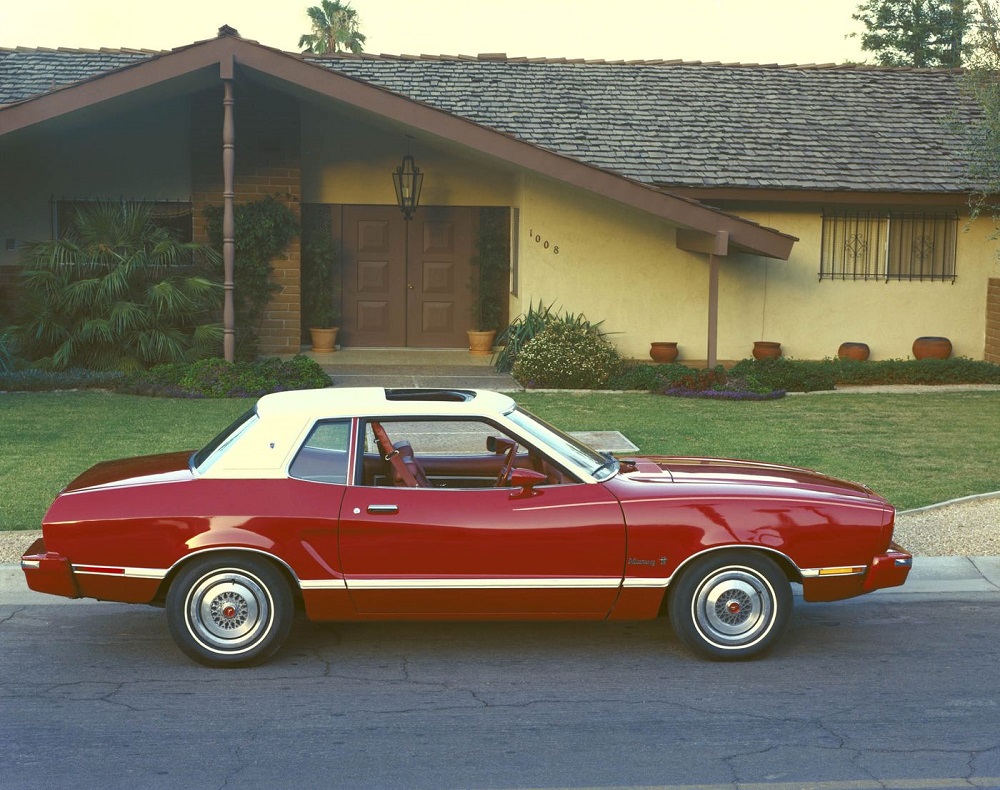
The convertible Mustang died off in the early ’70s; challenging sales, less-than-stellar output figures, and underwhelming design changes were on the horizon. Fortunately, Ford started producing ragtop Mustangs again in 1983. The early ’90s brought about a great deal of interest in LX 5.0 Mustangs, which outsold all other versions of the Mustang combined.
Ford is celebrating the milestone with employee celebrations at its Dearborn headquarters and its Flat Rock Assembly Plant, including flyovers from three WWII-era P-51 Mustang fighter planes and Mustangs produced for more than five decades parading from Dearborn to Flat Rock, where the Mustang currently is manufactured.
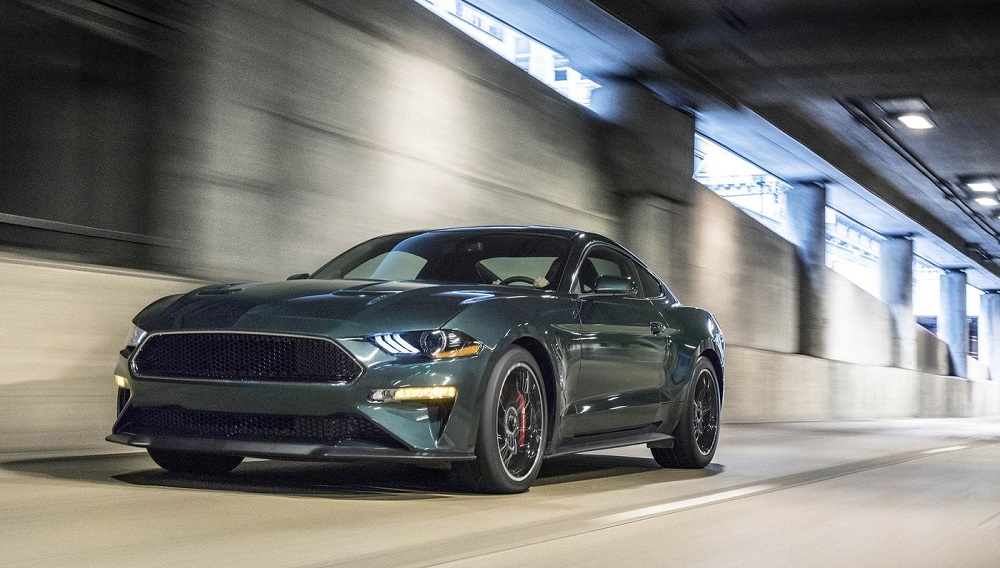
This year may not be a big anniversary year in terms of the Mustang as a whole, but 2018 does mark the 50th anniversary of a significant Mustang model. Back in 1968, The King of Cool, Steve McQueen, starred in a movie called “Bullitt.” You might have heard of it. A certain green Mustang GT fastback also got a great deal of spotlight in the film. Like McQueen, the so-called “Bullitt Mustang” has a legacy.
Ford released contemporary versions of the Mustang that paid tribute to it in 2001 and 2008. The newest incarnation of the Bullitt Mustang is a 2019 model based on the GT fastback which features design cues that pay homage to its illustrious history and a 480-horsepower version of the Mustang GT’s 5.0-liter V8.

There have been dark times in the Mustang’s 54-year history, but today’s attractive, powerful, capable, and tech-packed version of it puts a smile on the faces of Mustang lovers and gives all of us reason to believe that the road that is the Mustang’s legacy will stretch on for years – and millions of more sales – to come.








Join the Mustang Forums now!

You must be logged in to post a comment.