
Old-school V8 Mustangs Feel their Age Against EcoBoost Pony
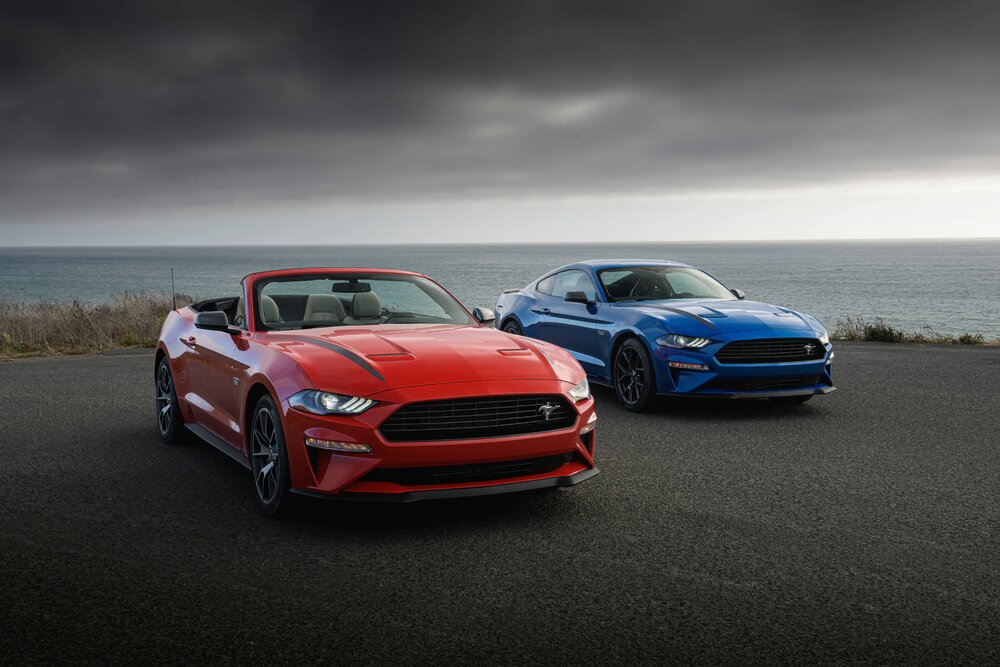
Mustang EcoBoost Turbo High Performance Package bests some of the V8-driven horses, including a few with big names attached.
When it comes to the Mustang, nothing is more fitting than a big V8 moving everything down the road, all with the sound no V6 or inline-four can ever make. The thrill of a V8 pony galloping freely across the plains just cannot be matched.
Or, could it. The 2020 Mustang EcoBoost Turbo High Performance Package packs a lot of punch from its 2.3-liter turbo-four, which Motor Trend experienced for itself not too long ago. They also found that it can keep up, if not blow past more than a few V8 ponies from the past, including those with big names attached to the legacy.

One of those V8 ponies was the magazine’s own project SVO car from 1997. The convertible had a 4.6-liter V8 gained a big Vortech supercharger, new exhaust, remapping, and a new gear ratio to push everything to 60 mph in six seconds. The new Mustang, on the other hand claims it can get there in four seconds.


The EcoBoost Mustang also puts to shame the giants of the Mustang legend, beginning with the 2007 Shelby GT. The white pony tested by MotorTrend back then could hit 60 mph in five seconds from its 319-horsepower 4.6-liter V8. The turbo-four packs a few more ponies in comparison, topping out at 332 horses without more serious upgrades. And again, zero to 60 mph in four seconds. Maybe Shelby American should see what they can do with the HPP.
Then, there’s the 2008 Saleen S281. Aside from the custom body work, the 4.6-liter V8 gained 335 horsepower and 345 lb-ft of torque, just three horses more than the EcoBoost, but also five pounds short of the 350 lb-ft of torque the turbo-four puts out. Despite having similar power figures, though, the Saleen jogs up to 60 mph in 5.1 seconds.
Finally, the Roush 427R Mustang from 2010 got a big, supercharged boost in power from Jack Roush’s shop in Livonia, Michigan, pumping out 435 horses and 400 lb-ft of torque to the rears. It certainly got the job done back in its day, reaching 60 mph in 4.7 seconds. However, all of that performance is now on par with the HPP a decade later. Technology marches on, indeed.
Photos: Motor Trend
Join the Mustang Forums now!

You must be logged in to post a comment.