


BMR Lower Control Arm (LCA) and Relocation Bracket Installation (w/pics)



Thread Starter
2nd Gear Member
Joined: Jun 2006
Posts: 415
From:
 RE: BMR Lower Control Arm (LCA) and Relocation Bracket Installation (w/pics)
ORIGINAL: sevenleaf
Ok I'm going to be installing my LCA's today so I was going over what I had to do. First step says
With the car on level ground, mark the rear shock relative to the protective outer sleeve.
How do you get around the tire to make this mark? Am I missing something simple.
Ok I'm going to be installing my LCA's today so I was going over what I had to do. First step says
With the car on level ground, mark the rear shock relative to the protective outer sleeve.
How do you get around the tire to make this mark? Am I missing something simple.
I cannot tell you from an engineering point why the rear end has to be under static load, but I have read elsewhere that it must be torqued in this static state or else it may start squeaking (or something like that).
To mark the shock, lay on your belly behind the tire and reach across with a piece of tape or marker. This was the easy part. If too difficult (no offense), you may want to consider having them professionally installed.

4th Gear Member
Joined: Mar 2006
Posts: 1,138
From:
RE: BMR Lower Control Arm (LCA) and Relocation Bracket Installation (w/pics)
ORIGINAL: TacoBill
(In regards to installing non-adjustable LCA's) This procedure is outlined in the Ford Service Manual... and the stock LCA's are non-adjustable too.
I cannot tell you from an engineering point why the rear end has to be under static load, but I have read elsewhere that it must be torqued in this static state or else it may start squeaking (or something like that).
To mark the shock, lay on your belly behind the tire and reach across with a piece of tape or marker. This was the easy part. If too difficult (no offense), you may want to consider having them professionally installed.
ORIGINAL: sevenleaf
Ok I'm going to be installing my LCA's today so I was going over what I had to do. First step says
With the car on level ground, mark the rear shock relative to the protective outer sleeve.
How do you get around the tire to make this mark? Am I missing something simple.
Ok I'm going to be installing my LCA's today so I was going over what I had to do. First step says
With the car on level ground, mark the rear shock relative to the protective outer sleeve.
How do you get around the tire to make this mark? Am I missing something simple.
I cannot tell you from an engineering point why the rear end has to be under static load, but I have read elsewhere that it must be torqued in this static state or else it may start squeaking (or something like that).
To mark the shock, lay on your belly behind the tire and reach across with a piece of tape or marker. This was the easy part. If too difficult (no offense), you may want to consider having them professionally installed.
Does the Ford service manual say to mark the rear shocks? I don't understand why they have you do that either. Unless it's because in many shops the car would be on a lift and the free hanging axle would have to be raised. In which case the marks would get it close to ride height.

3rd Gear Member
Joined: Jul 2007
Posts: 921
From: South Carolina
RE: BMR Lower Control Arm (LCA) and Relocation Bracket Installation (w/pics)
ORIGINAL: TacoBill
(In regards to installing non-adjustable LCA's) This procedure is outlined in the Ford Service Manual... and the stock LCA's are non-adjustable too.
I cannot tell you from an engineering point why the rear end has to be under static load, but I have read elsewhere that it must be torqued in this static state or else it may start squeaking (or something like that).
To mark the shock, lay on your belly behind the tire and reach across with a piece of tape or marker. This was the easy part. If too difficult (no offense), you may want to consider having them professionally installed.
ORIGINAL: sevenleaf
Ok I'm going to be installing my LCA's today so I was going over what I had to do. First step says
With the car on level ground, mark the rear shock relative to the protective outer sleeve.
How do you get around the tire to make this mark? Am I missing something simple.
Ok I'm going to be installing my LCA's today so I was going over what I had to do. First step says
With the car on level ground, mark the rear shock relative to the protective outer sleeve.
How do you get around the tire to make this mark? Am I missing something simple.
I cannot tell you from an engineering point why the rear end has to be under static load, but I have read elsewhere that it must be torqued in this static state or else it may start squeaking (or something like that).
To mark the shock, lay on your belly behind the tire and reach across with a piece of tape or marker. This was the easy part. If too difficult (no offense), you may want to consider having them professionally installed.
Anywho I was just wondering if you go by feeling I'm sorry i can't fit under my car.
Thread Starter
2nd Gear Member
Joined: Jun 2006
Posts: 415
From:
RE: BMR Lower Control Arm (LCA) and Relocation Bracket Installation (w/pics)
ORIGINAL: Black GT
I guess there might be a problem if you have the vehicle lifted and the axle hanging freely. BMR's step#1 says to lift the vehicle and support by the axle, so that would give you a static load (supported by the axle).
Does the Ford service manual say to mark the rear shocks? I don't understand why they have you do that either. Unless it's because in many shops the car would be on a lift and the free hanging axle would have to be raised. In which case the marks would get it close to ride height.
I guess there might be a problem if you have the vehicle lifted and the axle hanging freely. BMR's step#1 says to lift the vehicle and support by the axle, so that would give you a static load (supported by the axle).
Does the Ford service manual say to mark the rear shocks? I don't understand why they have you do that either. Unless it's because in many shops the car would be on a lift and the free hanging axle would have to be raised. In which case the marks would get it close to ride height.
ORIGINAL: sevenleaf
Hah, I imagine this is going to be easier then installing my supercharger, upgrading my pumps to the dual gt pumps or my latest installing break pads!
Anywho I was just wondering if you go by feeling I'm sorry i can't fit under my car.
Hah, I imagine this is going to be easier then installing my supercharger, upgrading my pumps to the dual gt pumps or my latest installing break pads!
Anywho I was just wondering if you go by feeling I'm sorry i can't fit under my car.
I can assure you it's way easier than installing you SC.

If you're planning on setting the rear down on some ramps, you can skip the marking step as it will be in the static position.
3rd Gear Member
Joined: Jul 2007
Posts: 921
From: South Carolina
RE: BMR Lower Control Arm (LCA) and Relocation Bracket Installation (w/pics)
Thanks for the help Tacobill, installed in under 2 hours not so bad I think. Took it for a test drive and WOW. You really notice the car pull together in the rear end. No sqeeks as of yet.




2nd Gear Member
Joined: Jan 2007
Posts: 403
From: Plant City FL

BMR Lower Control Arm (LCA) and Relocation Bracket Installation
Install Time: 2 Hours
Tools Required: Basic Metric tools, large wrenches (up to 22mm), torque wrench (up to 130 lb-ft)
This install was performed on my buddy's car, Leo06GT.
See BMRs website for info as to what functions the LCA and Relo-Brackets serve.
Tip by RUgoinUP
Note: Be sure to do one LCA side at a time. Otherwise the LCA's may not reach the relocation axle bracket upon re-installation.
If you already removed both LCA's, use a jack near the front of the axle housing (pumpkin) by the pinion flange, which will bring it close enough to work.
Procedure:
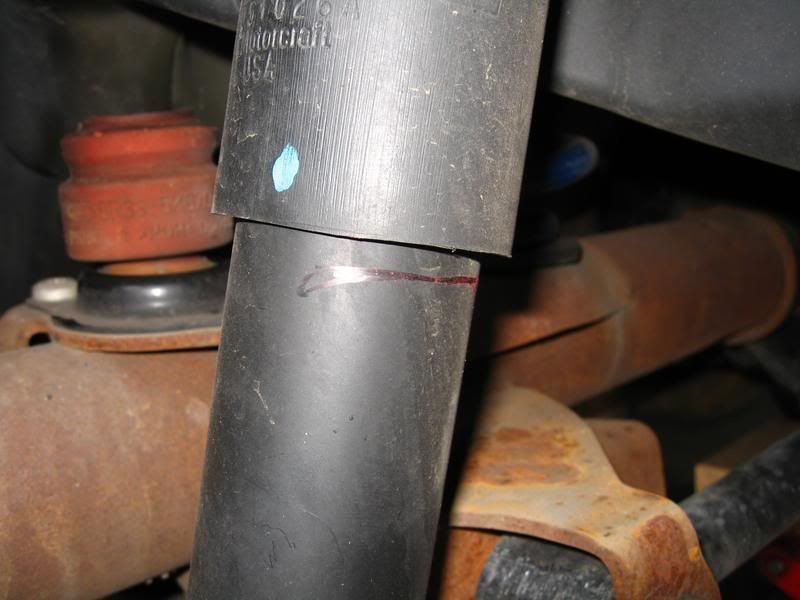
With the car on level ground, mark the rear shock relative to the protective outer sleeve.
Install Time: 2 Hours
Tools Required: Basic Metric tools, large wrenches (up to 22mm), torque wrench (up to 130 lb-ft)
This install was performed on my buddy's car, Leo06GT.
See BMRs website for info as to what functions the LCA and Relo-Brackets serve.
Tip by RUgoinUP
Note: Be sure to do one LCA side at a time. Otherwise the LCA's may not reach the relocation axle bracket upon re-installation.
If you already removed both LCA's, use a jack near the front of the axle housing (pumpkin) by the pinion flange, which will bring it close enough to work.
Procedure:
With the car on level ground, mark the rear shock relative to the protective outer sleeve.