When you click on links to various merchants on this site and make a purchase, this can result in this site earning a commission. Affiliate programs and affiliations include, but are not limited to, the eBay Partner Network.
How To: Remove Evap Canister, Possible Fix for Fuel Filling Issue
Hi all,
I googled around and couldn't find instructions with pictures to remove the evap canister. The closest I've found is this link below but the picture no longer works. So here's my write up.
The goal is to fix the fuel filling issue where the pump will stop filling before it's full. I have to keep on re-engaging it until it's actually full.
Tools:
-11 mm socket
-3/8 wrench
-needle nose plier
-small flat head screwdriver
-electrical tape
-air compressor with air nozzle attachment
-jack
-jack stand
-chock or wooden block
Step 1:
Chock your front wheel so it won't roll. We'll be jacking up the rear so having the car in gear or ebrake engaged won't do anything.
Step 2:
Jack your car up and put jack stands on your axle. I jacked it up the controversial way but you can do it on the designated jack points.
Step 3:
Locate the evap canister shield. It's mounted where your spare tire is.
Step 4:
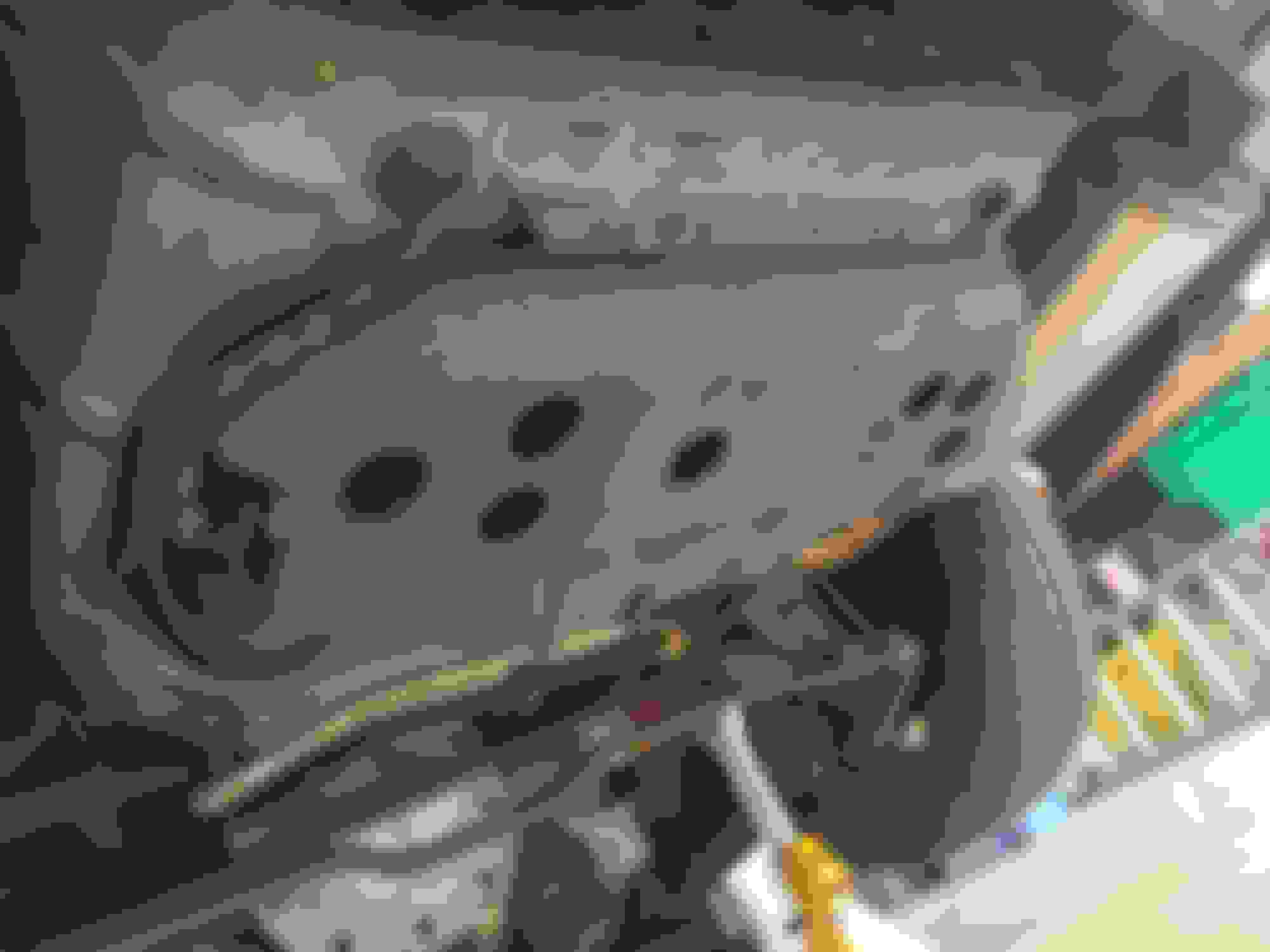
On the driver side, disconnect the evap canister vent solenoid. This can be done by hand. You press on the tab and pull it off the connector. Follow the cable and you'll run into some electrical tape that tapes the cable onto the shield. Cut the tape. you can see it in my picture on the right.
Step 5:
On the front of the evap shield, there are two lines running in parallel that connects to the left and right fuel tank. One has a yellow button and the other one has a white button. Press those buttons and pull to separate the lines. My car is a bit old so I used a plier to clamp down to press on it. If you follow the hardline, you'll run into a bracket pretty quickly. Separate those too. It's in my picture below.
Step 6:
If you follow a tube on the passenger side, it comes to a dead end. It's an open tube for air to bleed out. Follow it back to the evap shield and you'll run into a rubber hose. Separate that. Alternatively, you can disconnect two brackets to free that tube, which is what I did but it was a pain to get it back in so disconnecting the tube is better. You just pull really hard to separate.
Step 7:
Last bracket. It's on the driver's side. There are two parallel tubes, one plastic, one metal. Use the flathead screwdriver to unlock it. Then fold it back to remove the tubes.
Step 8:
Now it's time to drop the evap shield. There are two bolts on the back side and two screws on the front side. They all take a 11 mm socket. Unscrew all of them. Pull the shield slightly forward and it'll drop. You can tell from the picture below that the back is resting on a lip.
Once dropped, it looks like this.
Step 9:
Shove the nozzle from the air compressor and blast it through. If no air is coming out on the other end, decouple the tubes and blast air through. Keep blasting until you find the block.
Step 10:
Installing is the reverse. Grab electrical tape to tape back where you cut off, like below.
I still have a lot of gas left so I haven't filled up to see if the issue is fixed. But my evap assembly is a lot more free-flowing.
Excellent. Did you have any evap fault codes stored in the ECU before you cleaned the system?
I also have the same annoying slow fuel fill up. The first 5-6 gallons seem to go in fine and then the pump starts clicking even though the tank is a long way from being full. I have no codes and the engine runs perfectly but datalogs show the evap system vapor pressure fluctuates between +31 and -31 in H2O.
No codes. I actually didn't think it'll work. Looking at another guy's post, he did the same exact thing but when he blew into the tubes, puffs of dust came out. Nothing came out for me. I disassembled it and blew into each component and the air went straight through so I wasn't hopeful. I've been thinking, if you want to do this a quicker way, just do step 5 and try injecting air from there without removing the whole thing. If that doesn't work, then you may have to disassemble everything. It's super easy to remove, probably slightly more difficult than removing your wheel.
I managed to remove my EVAP system without jacking the car up, and blasted compressed air into the inlet line. Only a very small puff of dust came out and the air flowed freely right through, so evidently my EVAP system was pretty clean and working fine.
Therefore it was no surprise to find that when I went to add fuel to the tank the next time, the pump started clicking as soon as I'd reached half tank. I think the only proper fix for the slow fuel fill is to modify the filler neck.
hmm, I was hoping that this would be an easy solution but it sounds like this problem isn't that easy. Did you disassemble the whole system? I took everything apart that I can find and blew air into each one. I have been filling fine since but I wonder if I've been getting lucky so far.
From the outset I determined that the system was free flowing so I didn't feel it was necessary to disassemble it.
Now to decide how to modify the poorly designed filler neck. It's been a PITA since I bought the car 7 years ago. The passenger side of the tank fills up quickly but once you get to half tank and the driver's side begins to fill up, the pump starts clicking.
Last edited by Dino Dino Bambino; Aug 18, 2020 at 01:41 AM.
Let me know if you are able to find a solution to the neck. I would very much like to get rid of this problem permanently also. Mine hasn't been acting up yet but I feel that I've been getting lucky.



 How To: Remove Evap Canister, Possible Fix for Fuel Filling Issue