


Is this a problem


Thread Starter
2nd Gear Member
Joined: Oct 2012
Posts: 220
From: florida

Just cut off the terminal cables from the harness? attach new cable to the harness? this sound like require soldering of some kind.

3rd Gear Member
Joined: Jan 2005
Posts: 701
From: New Bern, NC
My little brother has had numerous cars in his life among other things, and he is very, very handy with many things in fix and repair on them or his house. When he is stumped he goes to www.youtube.com and asks. An amazing source which i have used on occasion. Such as trans on my Subaru and plug replacement on it. My '05 GT has always had no issues. Except I replaced its radio a few years ago. Happy Hunting!
3rd Gear Member
Joined: Jul 2017
Posts: 849
From: AZ
Simply put, the heavy cable can be cut out, and replaced by a new one having a battery terminal affixed to the battery end, and crimped to the remaining part of the old cable using a good heavy duty crimp type connector. Below is a typical replacement battery terminal. It is made of lead and requires no soldering:
The other end of your replacement cable can be connected to the remaining part of the old cable by a terminal such as this:
These particular ones are for Number 2 wire or smaller, and the ends of the cables to be spliced together are inserted and mechanically squeezed tightly within the terminal by crushing it. Soldering the assembly is a good idea, but not mandatory. Taping over it is.
Thread Starter
2nd Gear Member
Joined: Oct 2012
Posts: 220
From: florida
Let's go back to the OP picture. The fat battery cable disappears into convoluted plastic covering. SOMEWHERE that cable re-emerges connected to either a starter solenoid (if older vehicle) or at the starter motor itself. Another smaller cable or wire is in newer vehicles connected to the fat one at the battery terminal: that is visible if it's there, in your photo it is not, suggesting that smaller wire "take-off" has to be done elsewhere. In any event, the battery cable feeds power to the starter and EVERYTHING in the rest of the vehicle. Along the way, the alternator is also connected to those cables. If you are not familiar with doing electrical wiring and how it works, it is difficult to see exactly what I'm trying to say.
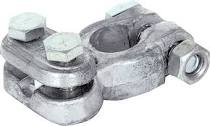
Simply put, the heavy cable can be cut out, and replaced by a new one having a battery terminal affixed to the battery end, and crimped to the remaining part of the old cable using a good heavy duty crimp type connector. Below is a typical replacement battery terminal. It is made of lead and requires no soldering:
The other end of your replacement cable can be connected to the remaining part of the old cable by a terminal such as this:
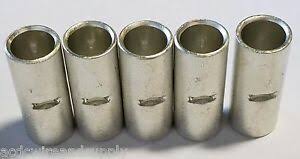
These particular ones are for Number 2 wire or smaller, and the ends of the cables to be spliced together are inserted and mechanically squeezed tightly within the terminal by crushing it. Soldering the assembly is a good idea, but not mandatory. Taping over it is.
Simply put, the heavy cable can be cut out, and replaced by a new one having a battery terminal affixed to the battery end, and crimped to the remaining part of the old cable using a good heavy duty crimp type connector. Below is a typical replacement battery terminal. It is made of lead and requires no soldering:
The other end of your replacement cable can be connected to the remaining part of the old cable by a terminal such as this:
These particular ones are for Number 2 wire or smaller, and the ends of the cables to be spliced together are inserted and mechanically squeezed tightly within the terminal by crushing it. Soldering the assembly is a good idea, but not mandatory. Taping over it is.
Yesterday on my off day i decided to cut into the copper wires by removing the shrink wrap tubing and electric tape. So far the corrosion has only traveled about a inch down the wires. I mixed baking soda with water and dipped the corrosion part of the wire but even with a tooth brush i couldnt scrub every bit of the green stuff off. Im thinking about doing another dip and scrub then use a corrosion preventative spray to coat the wires then seal it up with liquid electrical tape.
3rd Gear Member
Joined: Jul 2017
Posts: 849
From: AZ
Yesterday on my off day i decided to cut into the copper wires by removing the shrink wrap tubing and electric tape. So far the corrosion has only traveled about a inch down the wires. I mixed baking soda with water and dipped the corrosion part of the wire but even with a tooth brush i couldnt scrub every bit of the green stuff off. Im thinking about doing another dip and scrub then use a corrosion preventative spray to coat the wires then seal it up with liquid electrical tape.

Thread
Thread Starter
Forum
Replies
Last Post