
Goodwood Autonomous 1965 Mustang: What Really Happened
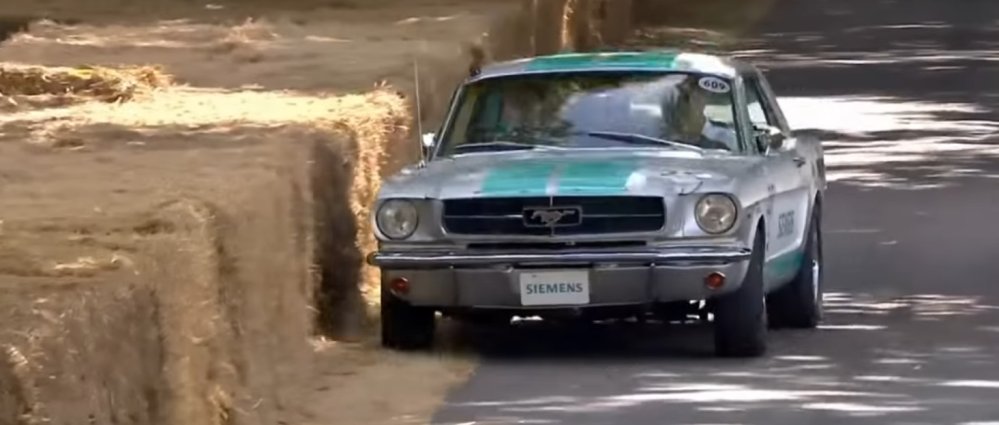
Mechanical issues and poor planning led to the sloppy performance of the self-driving Mustang at the Goodwood Festival.
One of the most unusual vehicles participating in the Hill Climb portion of the 2018 Goodwood Festival of Speed was an autonomous 1965 Ford Mustang. One of two self-driving cars in the field, Siemens and Cranfield University combined the mechanical workings of the classic pony car with the latest in autonomous technology. The idea was to showcase an iconic, old-school car with the future of the industry, but the result was a look at a bleak future. According to The Sunday Times, it wasn’t due to the high-tech gadgets.
Sloppy Runs
When the autonomous Mustang made its first run in the Goodwood Hill Climb, it was a mess from the start. As the car left the starting gate, it quickly began to weave back and forth, looking like a car being driven by a very drunk individual. Within the first few seconds of the first run, the human driver had to intervene, steering the car back onto the road and narrowly missing the straw bales that line the course.
As the car went into the next turn, a long, sweeping right, the driver had to step in again to keep the car on the track and that first stretch was echoed throughout the run. The Mustang slowly weaved from side-to-side, coming unnecessarily close to the straw bales and forcing the human driver to save the day several times before reaching the finish line. You can watch the run in the video below.
A second run would be much better, with less near-crashes and a bit less human intervention, but the run was still slow and sloppy, with the 1965 Mustang struggling to stay anywhere near a normal driving line on the Goodwood course.
For many people, this was an example of why we shouldn’t trust autonomous technology, serving as a black eye for the self-driving movement and Siemens. The autonomous Mustang and self-driving technology quickly became the butt of jokes across the internet, but it turns out that a failure by the self-driving tech didn’t lead to the problems. It was actually a mechanical issue with the 1965 Mustang and some poor planning advice given to the build team.

Goodwood Problems Detailed
The first run went so wrong due to a power steering system failure. While the 53-year old Mustang had a high-tech guidance system, it had all of the original mechanical parts – including the steering system. Before the first run of the day, the power steering system began to leak and the amount of pressure needed to turn the car changed. Software changes were made to accommodate for the change in required steering pressure, but it clearly wasn’t enough of a change.
That was why the human driver had to keep the Mustang off of the wall on that first run, but with more adjustments after that run, the team was able to continue to improve the automated control of the car.
What about the Weaving?
As for the odd weaving that occurred during every run, it turns out that the programming team designed the system to swerve back and forth pointlessly. When the programming team spoke with the television crews ahead of the event, the TV people insisted that the car would look better on camera if it was steering a great deal, so the team programmed the car to pointlessly weave around. It certainly showed more action on camera, including the movement of the steering wheel, but it also made the system look like it couldn’t keep track of where it should keep the car on the road.
What was intended to create better television made the autonomous 1965 Mustang stagger around the course like a drunkard, but it wasn’t a system failure as much as it was a failure by those providing advice. At the same time, the team made an odd decision to make the run without a radar system, leading to even more problems.
No Radar, Plenty of Problems
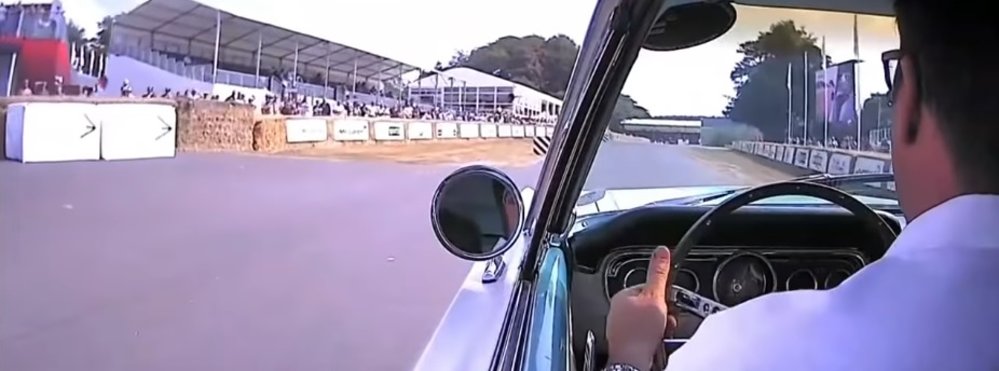
Although the 1965 Ford Mustang build by Siemens and Cranfield University was equipped with a radar system similar to the one used in self-driving road cars, that system was shut off for the Goodwood Hill Climb. The team was concerned that if another car was to crash on the course, it could confuse the system, so the Mustang instead navigated the course with to GPS antennas and a system of accelerometers and gyroscopes. With each run, this system learned the course and improved, but this approach contributed to the slow stumble up the hill.
The television people may have also caused interference with the GPS system, with their cameras broadcasting from inside of the car during the run. While this part seems to be unknown, it is possible that the television camera signals could have caused some static in the communication lines for the autonomous system.
In the end, the problems that plagued the autonomous 1965 Ford Mustang showed us what all can negatively impact the function of this type of self-driving car, while also teaching those teams building similar cars in the future some vital lessons.
Join the Mustang Forums now!

You must be logged in to post a comment.